Category

Blog

Blog, Indonesian Lesson

Making the Payment In Bahasa Indonesia

Here are some useful vocabulary for you to study:

bayar/membayar – to pay
“Bisa saya membayar makanannya sekarang?”

pembayaran – payment
“Saya mau melakukan pembayaran tunai.”

berbayar – to pay
“Apa layanan ini berbayar?”

cara bayar – payment method
“Bagaimana cara bayarnya?”

struk – receipt
“Ini struknya.”

beli/membeli – to buy
“Kami mau membeli mobil baru.”

pesan/memesan – to order
“Saya mau memesan minuman.”

Blog

Don’t Do These Four Things on Nyepi Day

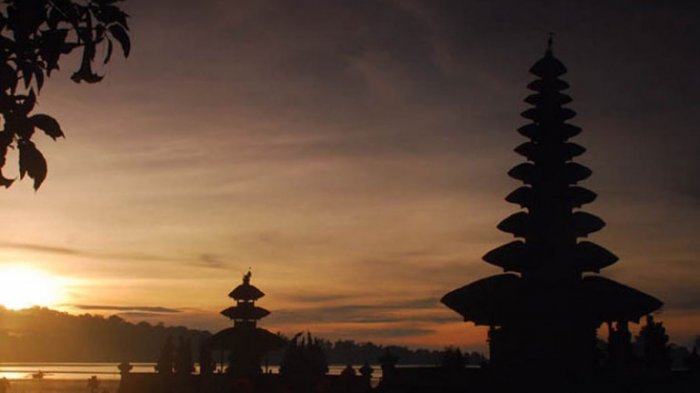
Rich with cultural tradition and value, Bali is the house for many unique festivities in the island. Nyepi is one of the most famous celebrations in Bali, acknowledged by the citizens of the world and even adopted globally as World’s Silent Day. In simple way, Nyepi is known as the Balinese Day of Silence, observed primarily in the island of Bali, a small exotic island in Indonesia. Nyepi is a sacred Hindu holiday that involves self-reflection and is marked by a complete shutdown of daily activities among the people. There are four things you cannot do on Nyepi Day:

  1. No Traveling (Amati Lelungan)
    • People are not allowed to leave their homes. Your neighborhoods will be strictly guarded by the traditional Balinese security called pecalang. They wear mostly black outfit (often with checkerboard pattern). On Nyepi Day, the airport in Bali is completely closed for 24 hours (from 6.00 in the Nyepi Day morning until 6.00 in the morning on the next day.
  2. No Entertainment or Enjoyment (Amati Lelanguan)
    • Activities like watching TV, listening to music, or engaging in entertainment are prohibited. By doing this, the Balinese people are encouraged to navigate their life slowly, embracing the life before them, and reflect on the events happened in their life in the past. In this fast paced modern life, celebrating Nyepi in Bali sounds like living a real slow lifestyle, going against what is considered as normal in our daily life.
  3. No Work (Amati Karya)
    • Businesses, offices, and shops in Bali island remain closed on Nyepi Day. Furthermore, the Balinese Hindu people is strongly suggested to not working on this day, at any means. So, what do we do on Nyepi Day? Nothing. We will use the best of this time to strengthen our bond with the members of the family simply by sitting down together and talk. We can also use this opportunity to help our body to rest properly. Healed from the hustling modern life that we live throughout the year.
  4. No Fire or Lights (Amati Geni)
    • No lighting of fires, including cooking, and no use of bright lights at night. Usually the Balinese Hindu people will fast on Nyepi Day. However, in some household, especially in a house with little children and elderly, cooking activities often done as normal day, but should be finished before 6.00 in the morning. No more cooking activities (or any other activities with fire) done in the house. Balinese Hindu people will get ready to celebrate Nyepi.

If you are not a Balinese Hindu, but would like to participate in celebrating Nyepi, you can manage yourself to follow all those 4 rules on Nyepi Day. Even tourists in Bali is obliged to respect these restrictions. If you happe to stay in Bali on Nyepi Day, please be informed that you are not allowed to turn on the lights in your house. Even if you need to turn the light on, you should cover windows in the house so that the light in your bedroom is not visible from outside. You are not permitted to go outside your house yard. Pecalang will stop you and reprimand you if you do. Mobile data and local television channels are disabled for 24 hours. Despite all of these restrictions during Nyepi day, the night sky on the island will be amazingly clear without light polution, so that you can look up and see countless stars over your head. The goal of Nyepi is to achieve spiritual cleansing through silence, meditation, and practice self-discipline.

Blog

10 Daily Expressions in Indonesian

If you are newly move to Indonesia, learning a few Indonesian expressions can make a huge difference in the way you connect with people around you. It will also be useful to navigate your daily life. This post will show you some Indonesian expressions for your basic Indonesian language skills. These phrases will undoubtely help you to blend in and feel more confident to interact with people in Indonesia. Plus, using Indonesian expressions shows that you’re making an effort to respect the local way of life.

Apa kabar?
This catchy two words phrase in Indonesian means “how are you”. It is one of the most learned daily Indonesian phrases and show your friendliness to the locals. Almost everyone who come to Indonesia knows this expression, but have you pronounced it correctly? Check with your language teacher in Bali!

Hati-hati ya.
Be careful. As if aware that many things could happen when you do something in Indonesia or on your way to your destination (especially if you ride bike your own), Indonesian people love to give you warning by saying this phrase. Hati-hati, said twice, is commonly used along with goodbye phrase when you part with someone during the day.

Saya tidak suka pedas.
Typical Asian foods, especially Indonesian and Malayan dishes are served with chily paste, if not, with spices plunged in the cooking process. Nowadays, some westerners seem to start enjoying these kinds of cookings. However, if you are not a fan of spicy food, this phrase could be your saviour. Saya tidak suka pedas = I don’t like spicy (food) is the normal form of the phrase. If you want to go more casual, substitute “tidak” with “nggak” or “gak”. There, you speak like the locals now.

Sampai jumpa!
To say goodbye in Indonesian casually, you can simply say “dah!”. Yes, as simple as that. But then we don’t learn anything, right? 🙂 So, let’s take a look at the second most common goodbye phrase used in Indonesia: sampai jumpa = see you!, showing your entusiasm and expectation to meet the person again soon in the future.

Terima kasih.
Nothing can ever go wrong by saying thank you, in any part of the world. “Terima kasih”, or “makasih” for its short and relaxed version of the phrase, is how to convey your gratitude for any help, service, offer, or hospitality you’ve received from an Indonesian citizen. You can use it together with Tidak (no), to refuse an offer from street hawkers approching you at the beach, for example. Tidak, terima kasih. Don’t forget to smile while saying that.

Saya masih belajar bahasa Indonesia.
Looking at your effort in speaking Bahasa Indonesia, not only that your Indonesian neighbors will be happy, but also you’ll see them to urge you to speak Bahasa Indonesia even more. Indonesian people will be more than pleased to help you to study, that sometimes they can’t stop asking you questions in Indonesian. To escape the situation, you can tell them that you are not that fluent yet. Saya masih belajar Bahasa Indonesia = I’m still learning Indonesian, hopefully will drive to speak slower and clearer to you.

Maaf.
Making mistake in Indonesia or you simply feel sorry for a little inconvenience caused by your action? “Maaf” is the phrase that is useful for you to express how you feel at the moment. It shows your regret and apology towards the on going situation. Like all apology, saying “maaf” will require a concrete action to amend the situation.

Permisi.
Entering the house of your Indonesian neighbor or passing in front of an Indonesian person (especially the older one), you should say “permisi” which is equal to the meaning of “excuse me”. This phrase is used to politely ask to enter the personal space of the other people in Indonesia or if you are going planning to do another activity and leaving the forum. That is one of the social ethics among the Indonesian people which is commonly practiced in the country.

Kabar saya baik.
We’ve learned the expression to ask ‘how are you’ in Indonesian. Now, what if someone directs that question to you. What will you say to respond to that question? Kabar saya baik = I’m in good condition, may be one of the phrases that you are looking for, if you are telling the other people that you are doing well. At least this phrase will mandatory be said if you are talking to the people you newly met.

Willing to learn more about the language and culture of Indonesia? Contact Bali Language Services and get your special offer now! Limited spaces available. (dian.)

Blog, Indonesian Lesson

10 Indonesian Flowers Vocabulary

Famous for its vast varieties of flora, Indonesia is a home to countless number of exotic tropical flowers. From the unique smell of the corpse flower to the alluring fragrance of jasmine, there are so many features of Indonesian flowers that you can explore. Some of the flowers are also used to symbolize certain area in Indonesia, even one also chosen to be a national symbol of the country.

1. Mawar (Rose)

Roses were brought to Indonesia by the Chinese merchants in the old times. Originally, this plant lived in the mainland of China, Middle East, and Eastern part of Europe, then due to its popularity, roses are widely spread to the subtropical and tropical country like Indonesia. The family of Rosaceae comes with various colors. The most classically popular one is the red rose, symbolizing courage and love.

2. Melati (Jasmine)

Known for its modest beauty and alluring fragrant, white jasmine (Jasminum Sambac) has been chosen as the national flower of Indonesia. In the country, Jasmine is thought as the symbol purity, splendor, modesty, sincerity, beauty, and simplicity. Other than being part of a wedding, jasmine is widely used within the communities of Indonesia in numerous religious and traditional practise.

3. Kamboja (Frangipani)

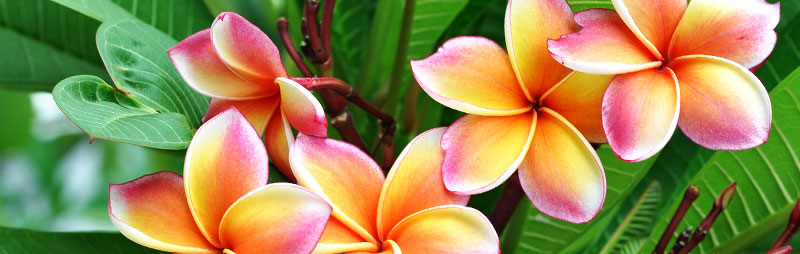
The use of frangipani in the daily life of Indonesian people is inseparable. Symbolizing true loyalty and devotion, the flower is commonly used for decoration and even become part of traditional wedding. In spiritual and religious practise, frangipani particularly reflects the purity of the heart in praising God, gods and godess, as well as to the spiritual beings and ancestors.

4. Kembang Sepatu (Hibiscus)

In many cultures, hibiscus flowers are depicted as beautiful flowers rich with feminine energy. Even in the norh part of America, hisbiscus is associated to the perfectly beautiful wife or woman. As if it is gaining a contradiction, hibiscus in the life of the Balinese people representing masculinity, especially the red one. Men often use the red hibiscus (particularly the small one), to complete their traditional look, pinned on the headpiece or on the pocket of their shirt. The Balinese even have a special way to call this little red hibiscus: ‘pucuk rejuna’, refering to the beauty of Arjuna (arjun) from the epic story of Mahabharata.

5. Kembang Kertas (Bougenvillea)

Bougenvillea is famous for its year-round beauty, and its resilience to hot and dry weather, tipically grown in the area with tropical climate. In Javanese culture, bougenvillea is believed to bring bad luck in romantic love-relationship. However, it is also believed as a symbol of eternal love from the parents to their children. Within the Chinese-born family, having bougenvillea planted in the yard could invite good luck and blessings to the house.

6. Soka (Ixora)

Its beautiful name is derrived from a Sanskrit word means “freedom from sorrow”. In the western countries, the flowers of ixora is called the flame of the woods as its small flowers pop out in bright colors among their green leaves. Ixora plants live well on the land of tropical climate. Apart from its function in beautifying your front yard garden, ixora plants are also well known for its various benefits in traditional medical practice.

7. Anggrek (Orchid)

Widely diversed and spread in the world, the plant family of orchidaceae has been admired and collected by many flower lovers. A pot of orchid flower plant, especially the rare one, may worth hundreds thousands of rupiah, if not millions. Their flowers symbolize elegance, power, and beauty. Moon orchid, or in Indonesian called: “anggrek bulan”, is one of the most famous species of orchid in Indonesia, nationally acclaimed as the flower of charm.

8. Sakura (Cherry Blossom)

This famous Japanese flower is known for its symbol of beauty and highly valued morality. By the people of Japan, cherry blossom is deeply honored, and hurting or picking its flowers and twigs are considered as disrespectful action. The Japanese people also spend special time with family and friends having a picnic under the trees of cherry blossoms during its blooming season. In Indonesia, though the plant is famously known, they can only be found in certain area.

9. Bunga Padma Raksasa (Raflessia)

The stinky corpse lily was discovered within the period 1700-1800 in several areas in Indonesia archipelago by international naturalists. One of the most famous discoveries was made by Thomas Stamford Raffles, former Governor-General of the Dutch East Indies, in the deep rain forest of Bengkulu, Sumatra, in the year of 1818. Nowadays, along with the shrinking number of Indonesian rain forest, this rare flowers become extinct.

10. Teratai (Water Lilly)

The use of teratai or water lilies is mainly with the Hindu and Buddhist society send a number of meaningful messages. Growing in the muddy water while spreading its wide leaves and pretty flowers on the water surface, the water lily’s beauty never fades. Depending on its colors, the flowers of water lily may have different meanings, though everyone seems agree that water lily symbolizes bravery, compassion, and enlightenment.

What is our favorite flower and do you know how to say it in Bahasa Indonesia? Share what the flowers means for you and why does it special for you. (dian)


Blog, Indonesian Lesson

5 Indonesian Idioms with ‘Angkat’

You speak Indonesian at intermediate to advance level and would like to improve your Indonesian proficiency to be heard more like natives? It could be the sign for you to start learning and using idioms in Bahasa Indonesia so that your speaking will sounds more engaging. By learning and understanding the use of Indonesian idioms, you will also have a bigger chance to understand journalism works; news, articles, podcats, in more easy way.

In Bahasa Indonesia lesson, we learn that idioms are constructed from two or more words which had denotative (real / literal) meaning. However, when they are used together in certain circumstances, the meaning of these words compound will be different and they will also be used in conotative way (in subtle differens meaning). Take an example in the word “angkat”, which literally means to lift or raise as in the sentence: “The students raise their hands.” In these five examples, we can see that the word “angkat” has been used differently.

Angkat Tangan

Means to give up. Imagine a situation where you have tried your best in doing a task, but then you face obstacles that makes you feel stucked or even rethink about all the actions you have taken so far. This situation could cause you to quit and stop yourself from moving forward, so then, you give up on finishing the task. Here is an example of the sentence:

Dokter Anton angkat tangan untuk menyembuhkan penyakit kanker Pak Mahmud.

Angkat Kaki

Means to walk out of a room or forum. This idiom is often used to describe a situation where dispute potentially happen, in which one of a part of the forum participants who feel to not be accommodated in the forum. In other daily situation, idiom ‘angkat kaki’ can be used to describe a situation when a person walk out of a room or a house following the dispute previously happen in the room.

Para peserta rapat yang tidak setuju angkat kaki dari ruangan.

Angkat Bicara

Means to speak up, especially done after a long silent over a happening issue or gossip in the public setting. In this situation, the speaker may break the silence by taking a side, or giving response to the current issue, by giving statements on how they feel about it and what potential actions they are planning to take in the future.

Presiden angkat bicara tentang situasi politik di Indonesia akhir-akhir ini.

Angkat topi

Means hat off or hat tipping. Giving a tribute and appreciation to someone’s effort in doing their part, or responding to a difficult situation by saying “angkat topi” is relatable to its English expression ‘hat off’ or ‘hat tipping’. It seems like Bahasa Indonesia adopt the international cultural aspect hidden behind this expression as ‘topi’ and tipping a hat is not part of the traditional culture.

Angkat topi untuk totalitas para pemain di Liga Djarum tadi malam.

Anak angkat

Means foster child. Other terms will follow this compound words construction, including: ibu angkat, ayah angkat, adik angkat, orang tua angkat, or kakak angkat. The term ‘anak angkat’ will be used to describe a situation where a child is not biologically born, but rather to be adopted from another family to be raised as their own child.

Rania adalah anak angkat di keluarga Pak Putu dan Bu Kadek

Is there any other Indonesian idiomatic expressions that you’ve ever heard or read? Write in the comment and let’s see if you also know the meaning and how to use it. It doesn’t have to include ‘angkat’ in the expression. Could be other conotatic Indonesian word compounds as well.

(dian).

Blog, Indonesian Lesson

5 Ways to Invite People in Bahasa Indonesia

Have some Indonesian friends that you’d like to spend your time with? You may want to invite them to a party or simply ask them to join a fun weekend activity together. You always know how to share your ideas in English. How about inviting your Indonesian friends in their native language? It must be impressive, isn’t it? Here are 5 useful phrases in Indonesian you can use to invite people to join activities.

“Ayo…!”
E.g. “Ayo kita makan di warung sate!”
So, the word “ayo” basically means “come on”. This word usually comes together with “kita” as the subject of the action, translated as “we (you and me)”. There are some variation in spoken for this invitation word. The formal form is “ayo”. In daily informal conversation, people could go with “Yuk”, “Ayuk”, Yok”, “Yuks”, and other personalized spelling, but you can still figure out its origin.
Now, how do we respond to this invitation? If you are agree to join, you can simply respond by “ayo”. However, if you have another plan and choose not to join, you can apologize first and explain your situation. Like: “Maaf, aku mau makan di rumah. Ibuku masak banyak.”

“Mau …, tidak?”
E.g. “Kamu mau pergi ke pantai, tidak?”
Technically, this phrase is asking if you’d like to do something or not. Respond to the invitation by saying “Ya, mau.” or “Oke, ayo”, if you agree to go. Again, apologize and explain the reason of your unavailability if you can’t join it.

“Ada acara …?”
E.g. “Ada acara Hari Minggu sore?”
Before asking someone to join your activity, it is always good to check and confirm if that person will be available for the time required. Asking “ada acara …?” is one good, polite, and common way of Indonesian people to do it as it is immediately translated into “Do you have any plan …” followed with the time.

“Bagaimana kalau …?”
E.g. Bagaimana kalau kita menonton film besok?
This phrase equals to “what about…?”. Used to suggest some alternatives of activities to share together. By asking the question, it means that the person is open to any suggestion. There is an informal alternative to use so that your conversation becomes more relaxed. Replace “Bagaimana” with “Gimana”, and pronounce “kalau” as “kalo:”. Then the question will be: “Gimana kalo kita nonton film besok?”. Remember to put informal verbs form to match the question (nonton instead of menonton).

“Kapan-kapan kita …, ya?”
E.g. Kapan-kapan kita pergi bareng, ya?
“Kapan-kapan” is a vague time marker in Bahasa Indonesia, which means “one day in the future” and we are not sure when that time will be. It is normally used when you meet new person who surprisingly share the same interest to you or to an old friend you haven’t meet for quite a long time. It is used to suggest catch up activities in the unplanned future.

Use these expressions alternately in order to understand and be fluent in using them depending on the situation. Plus, knowing some alternatives of saying the same ideas will make your conversation be more interesting and so you don’t sound boring. Give it a shot! (dian).

Blog, Indonesian Lesson

Learn Indonesian Classroom Vocabulary

What can you see in a classroom? How do you say things and people you find in your Indonesian classroom? We’ve made a short list of 10 most important classroom related vocabulary for you in this article. Take a look at the list of words and practice the pronunciation right away. The pronunciation notes are described based on simplified International Phonetic Alphabet (IPA).

Guru /goo-roo/ = teacher

Murid /moo-reed/= student

Kursi /koor-see/ = chair

Meja /me-ja:/ = table

Papan Tulis /pa:-pa:n too-lees/= writing board

Rak /ra:k/ = shelf

Tas /ta:s/ = bag

Buku /boo-koo/ = book

Peta /pƏ-ta:/ = map

Poster /pos-tƏr/ = poster

Which of the above classroom related words can be found in your classroom? What are other things in the classroom you can say in Bahasa Indonesia? Leave a comment! (dian)

Blog, Cultural Insight

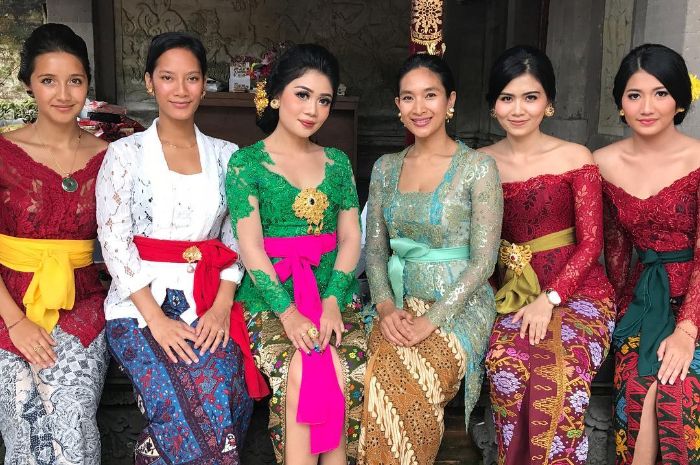
Balinese Costumes for Day to Day Celebration

You live in Bali for a while now, having some nice Balinese friends, and got an invitation to a family ceremony. Or, imagine this scenario: you work for a company based in Bali and a traditional Balinese ceremony is about to be conducted in your office. You may ask yourself (or your office mates), what to wear, where to buy it, and above all, if you decide to go to that traditional Balinese costume shop alone, what you should buy? The Balinese people may wear different costumes depending on the ceremonies they should attend and the areas the live. However, there is a common and general Balinese costumes that cannot go wrong in all situations to wear as a guest in a Balinese family or community, which are usually worn in day to day celebration. We write some guides for your reference before entering that fashionable Balinese boutique.

Man’s Costumes

Udeng

That piece of headband wrapped around a Balinese man’s head is called udeng (or “destar” in refined Balinese term). The color of udeng that you should wear will be different depending on the ceremonies you’ll attend. White udeng is always worn for religious ceremonies, normally combined with white saput and white shirt, symbolizing pure heart and good intention. For that office opening or anniversary ceremonies you may join in a couple of days, wearing white udeng is the right choice. In other occasions, colored or patterned udeng is prefered (not the black one – black is for mourning).

Baju Safari

There are two types of baju safari to be worn in a Balinese ceremony. The common one, and the fancy one. Common baju safari, mostly made of cotton, normally worn for day to day ceremonies held in an office, home, or temples. If you don’t have one, you can wear that white collared shirt you usually use for working purpose. Fancier baju safari is purposed for party like-festivities such as wedding or tooth filing of your close relatives, or, alternatively, you can wear your non-white collared shirt (ethnical patterns like batik, or endek is preferred).

Kamen

You are free to choose whatever pattern or colors you like to wear for your kamen (sheet of fabric that is often mistaken as sarung – sarong, the one that is similar in Java). If you are confident with your kamen styling skill, go ahead with kamen in sheet (get the tutorials online or ask a friend). However, if you – like most of foreigners in Bali – are an absolute beginner, pick the half-finished kamen. You just need to wrap it up around your waist without being worry of how to style that front end.

Saput

Always combined and matched with udeng, saput is often sold in pair (often-but not alway). The rules of wearing saput is closely similar to wearing udeng. However, there are times that wearing saput is not necessary for the Balinese men. That is when they attend community meetings and when they work together for a ceremony preparation. So if you come during a Balinese ceremony preparation instead of on the “big day”, adjust your costumes to be not too fancy.

Woman’s Costumes

Baju kebaya

Kebaya for Balinese women are offered in a wide variation of style and materials. If you have average body shape and size, there are lots of choice of finished baju kebaya to pick from the kebaya shop. However, since kebaya is meant to fit your body shape, a different size in chest size or waist size often cause problem, so that piece of kebaya that looks pretty on that boutique mannequin, doesn’t suit you. In this case, you should choose the bigger size (and give us the ideal look) or visit a specific tailor for kebaya Bali after you pick the kebaya sheet that you want. Also, remember to put on “long torso kebaya” – google to get the look of the item- inside your kebaya for a goo body shape purpose, especially if you choose to go with brokat (brocade) type fabric. White or yellow kebaya is worn for religious ceremonies.

Kamen

Balinese women are free to wear any color of kamen. But in the south pat of Bali (Kerobokan, Kuta, Canggu), wearing white kamen is aimed only for priests. So, it’s wise to not wear one. 🙂 Meanwhile, if you’ll attend a cremation ceremony, choose to wear dark shade of color.

Selempot

Wearing selempot symbolize that control of desire. In a religious ceremonies held in the temple, Balinese women often choose to wear yellow or orange selempot, or sometimes white. But again, in the south, white is usually worn by the local priests, or if you are joining a purification ceremony for the spirit of the deaths (who are a close family or yours). Black or dark blue (navy) selempot is common for mourning events.

Now that you’ve added up your Balinese costumes vocabulary, you are ready to go. Which Balinese costumes shop are you going to visit? (dian)

Related posts
Blog, English Lessons

Learning Phrasal Verbs “Make Up”

Since phrasal verbs are commonly used in English, and it often brings confusion among the learners of English language, we shall discuss some of the most common ones. The thing is, one phrasal verbs may contain a number of different meaning. You must be familiar with “make up” as a phrasal verb which have equal meaning to cosmetics. However, have you been familiar with its other functions and meanings?

We list some use of phrasal verb “make up” in different meanings coming together with examples on how to use it.

to compensate something lost

For example Mary planned to take her kids to the amusement park on Wednesday, but then she’s got an urgent work calling so that she has to cancel her plan. In that case, Mary wanted to go to the park on the weekend. Here’s what she might say to her kids:

“I’ll make up a time for the amusement park on the weekend. I promise.”

to apply cosmetics

This is one thing that almost everyone is familiar with. If a woman put on a make up, then she must be applying cosmetics (powder, lipstick, eye liner, etc). We can give you an example of a conversation between a father and his kid hurrying to the car in order to attend a party. They’re probably waiting for the mother to show up in the front door, when the father ask: where is your mom? Guess what the kid is saying!

“Mom is making herself up at the dressing table.”

to invent a story

Let’s think of a girl who is standing in front of her classmates. Her teacher told her to tell a tale, but she doesn’t know any. Everyone is waiting for her to say something so she should think fast. Luckily, she has a good imagination. An image of a kingdom with a king and a queen popped up in her head and she quickly create a story about them.

She makes up a story of a king and a queen!

image taken from brilio

to be reconciled

Now, this is the last one. A couple had a fight recently because the man forgot the date of their anniversary. He was sorry and would like to apologize to his wife in a nice manner. This is what he probably want to say:

“I’m sorry, honey. Let’s make up and have a dinner out!”

Those are four examples of using phrasal verb “make up” in four different meanings. Can you make your own sentences? Perhaps you’ve found some other meanings that come up with phrasal verb “make up”.

Related posts
How to Improve Your English
December 13, 2020
About Indonesia, Blog

The Islands of Indonesia

Indonesia is a unique archipelago country. It stretches along the equator, and its southern islands are standing exactly along the ring of fires where hundreds active volcanoes reside and ready to be awakened anytime. The unique features of this country makes it full of excitements, thanks to its widely varied geographical structures, ocean and sea barriers, and particular location.

Five big islands and thousands small others

Although the listed number is varied in different surveys, Indonesia has been confirmed to be the largest or the biggest archipelago in the world, with around 18.000 islands scattered within its territory. Among those islands, these five major islands are the most well-known: Sumatera, Java, Kalimantan, Sulawesi, and West Papua. Besides those infamous main islands, there many more small islands which gain their reputation among savvy travelers. Let’s say Bali as one of the samples, which has been a second home to many (from all around the globe) and an international melting pot for generations.

Different people with different languages

Living in thousands of different islands with sea barriers and mountainous area to settle in, the people of Indonesia are unsurprisingly different. They live different ways of life. They believe in different faith. They share different cultures and traditions. This fact makes Indonesian society uniquely bind into each other as people in the communities complete and support each other. Another unique fact is, these people of Indonesia speak hundreds of different languages (languages, not dialect). Some may be have close relation to each other (as in Javanese and Balinese), but most of them are completely different languages. That’s when Indonesia language takes its important role as lingua franca among the Indonesians. A language easily picked up by people, adapted to their own cultural roots, and understood as a bridge of communication when the local language failed.

Three time zones in Indonesia

Traveling within Indonesia area can be a bit tricky when it comes to time. Indonesia territory is divided into three regional time zone: Eastern Indonesia Time (WIT), Central Indonesia Time (WITA), and Western Indonesia Time (WIB). Therefore, whenever you plan to have a meeting or traveling across the country, make sure that you’ve adjusted your watch or phone time settings in accordance with your travel destination.

How long have you been living in Indonesia? What are other interesting facts you’ve figured out about Indonesian islands and its people? Leave your comment!

Related posts